
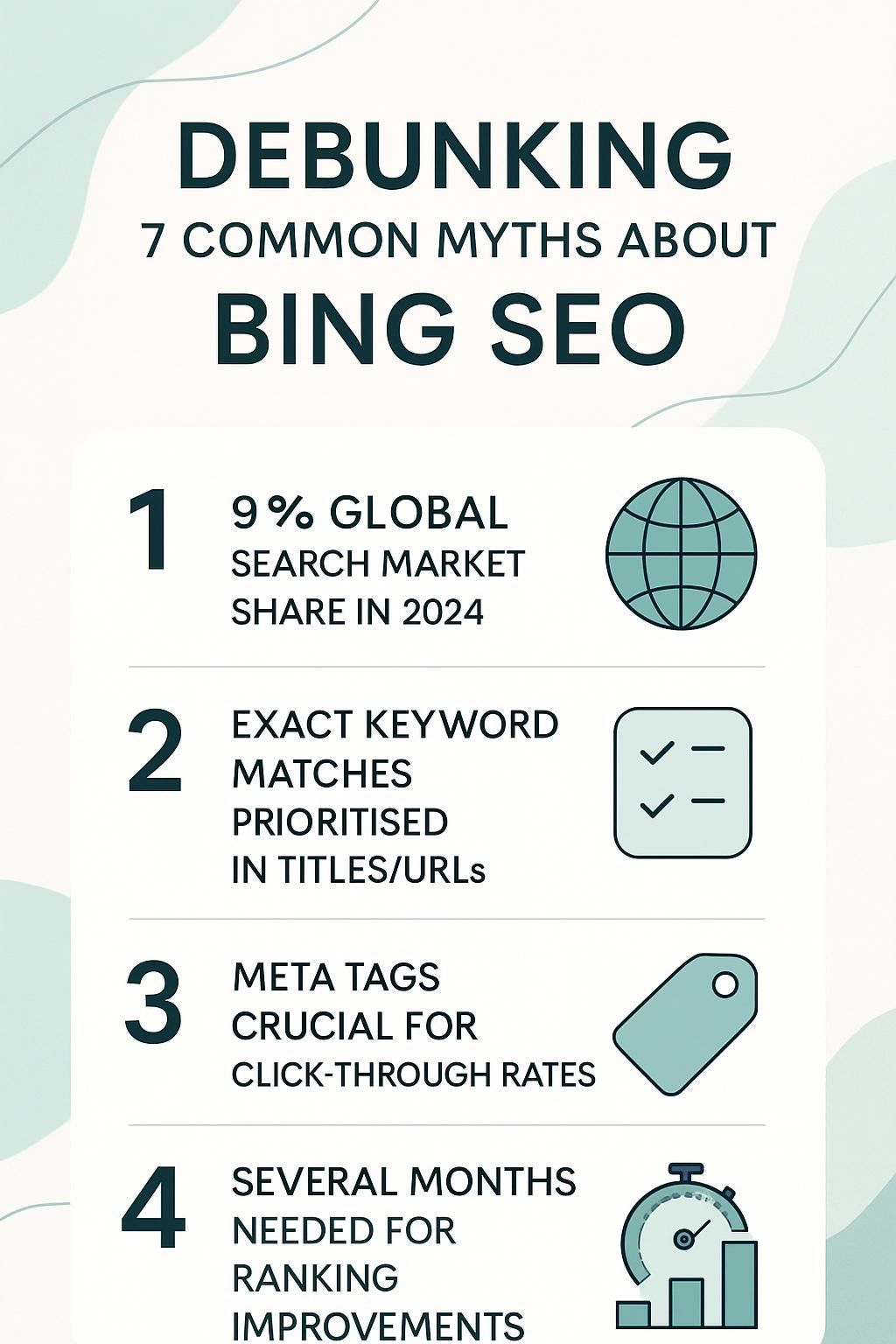
Too many website owners waste time on Bing SEO tactics that don’t work. With Bing powering over 9% of global searches, getting your strategy right matters. This guide cuts through the confusion to show you what actually works for Bing rankings. New to Bing? Read our complete guide to Bing SEO for Malaysian businesses first.
Key Takeaways
- Bing values quality over quantity for SEO. Focus on natural content, trusted backlinks from .gov and .edu sites, and active social media. Skip keyword stuffing and link farms completely.
- Meta tags still matter for Bing in 2024. Title tags and meta descriptions boost click rates. Use Bing’s IndexNow and Microsoft Clarity to track your site’s performance.
- Bing works differently from Google. It uses one index for all devices and favours desktop sites. Social signals count as ranking factors. Exact keywords in titles and URLs carry more weight.
- Success needs ongoing work. Update content regularly, optimise images properly, and keep your Bing Places listing current. Most sites need months of steady effort to see results.
- Create helpful content that matches what users want. Don’t chase word counts or top spots alone. Track organic traffic, bounce rates, and real conversions to measure success.
Does keyword stuffing improve Bing rankings?
Keyword stuffing will damage your Bing rankings, not help them. Bing’s algorithms spot repeated keywords instantly. The system marks stuffed content as spam and pushes it down in search results.
Think about how you read content online. You want clear answers, not the same words repeated over and over. Bing knows this too. The search engine rewards pages that explain things naturally.
Quality beats quantity every time with Bing SEO. Write content that answers real questions. Use keywords where they fit naturally. Your readers come first, then search engines. This approach gets you better rankings and keeps visitors on your site longer.
The best content uses related words and phrases, not just one keyword. If you write about “website ranking,” also mention “search results” and “online visibility.” This shows Bing your content covers the topic fully.
Do more backlinks always boost your Bing SEO?
Having more backlinks won’t automatically improve your Bing rankings. Quality matters far more than quantity here. Bing values links from trusted sites like universities and government websites.
Bad links can actually hurt your website. Links from spam sites or link farms trigger penalties. Your rankings drop, and recovery takes months. One good link from a .edu site beats fifty links from low-quality blogs.
Bing also cares about social signals more than Google does. Shares on Facebook, Twitter, and LinkedIn affect your rankings directly. This makes Bing unique among search engines. Your social media activity becomes part of your SEO strategy.
Build links slowly and naturally. Focus on creating content that experts want to share. Connect with people in your field. Guest post on respected sites. These tactics create the high-quality backlinks that Bing rewards. Stay away from quick-fix schemes that promise hundreds of links overnight.
Is SEO just a one-time effort?

SEO isn’t something you do once and forget. Search engines change their rules constantly. Your competitors update their sites daily. Standing still means falling behind.
Think of SEO like maintaining a garden. Plants need water, sunlight, and care to grow. Your website needs fresh content, technical updates, and monitoring. Skip these tasks, and your rankings wither away.
Bing offers free tools to help you stay on track. IndexNow tells Bing about your new content instantly. Microsoft Clarity shows how visitors use your site. These tools reveal problems before they hurt your rankings. Check them at least once a month.
Most websites take three to six months to see real improvements. Some competitive topics take even longer. The sites that win are those that keep working steadily. They add new content, fix technical issues, and improve user experience week after week.
Does social media activity affect Bing SEO?

Social media directly impacts your Bing rankings, unlike with Google. Every share, like, and comment sends positive signals to Bing. This makes social media a powerful tool for Bing SEO.
Your Facebook posts, LinkedIn articles, and Twitter threads all count. Bing watches these platforms closely. Active social profiles show your brand is real and engaged. This builds trust with both users and search engines.
Social media also creates natural backlinks. People share your content with their networks. Some write blog posts about it. Others link to it from their websites. These organic links boost your authority in Bing’s eyes. The more people talk about your content online, the higher you rank.
Microsoft Clarity data proves this connection. Sites with strong social presence get more traffic from Bing. They also keep visitors longer. Start by picking two or three platforms where your audience hangs out. Post regularly and engage with comments. Your Bing rankings will follow your social growth.
Does longer content guarantee better Bing rankings?
Writing longer articles won’t guarantee better Bing rankings. Some topics need 500 words, others need 2,000. The right length depends on what users want to know.
Bing measures engagement, not word count. Do visitors stay on your page? Do they click through to other pages? Do they find what they need? These signals matter more than article length. A helpful 300-word answer beats a rambling 3,000-word essay.
Microsoft Clarity shows that overly long content often increases bounce rates. Readers leave when they can’t find answers quickly. They want solutions, not novels. Match your content length to user intent. Quick questions need quick answers. Complex topics need detailed explanations.
Test different content lengths and watch your metrics. See which pages keep visitors engaged. Notice which ones lead to conversions. Let data guide your decisions, not arbitrary word counts. Quality and relevance win every time on Bing.
Are meta tags still important for Bing SEO?
Meta tags remain crucial for Bing SEO success in 2024. These HTML elements tell Bing exactly what your page covers. Without them, Bing has to guess, and that rarely ends well.
Title tags appear as the blue link in search results. They’re your first chance to attract clicks. Meta descriptions show up underneath as the grey text. Together, they convince users to visit your site. Write them carefully, and your click rates will soar.
Bing reads meta tags differently from Google. It pays closer attention to meta keywords, though they shouldn’t be your main focus. Schema markup matters even more. This special code helps Bing understand if you’re sharing a recipe, product review, or local business information.
Use Bing’s IndexNow to speed up how fast your meta tag changes appear. Update a title tag today, and Bing can show it tomorrow. This quick indexing gives you an edge over competitors who wait weeks for changes to appear.
Is ranking number one the only goal in Bing SEO?

Chasing the top spot misses the bigger picture of SEO success. Position three with perfect audience targeting beats position one with the wrong visitors. Focus on getting qualified traffic that converts.
The experts at bingseo.my track many metrics beyond rankings. They watch organic traffic growth, bounce rates, and conversion rates. A page ranking fifth that brings in customers beats a first-place page that nobody buys from. Real business results matter more than vanity metrics.
Bing offers multiple ways to appear in search results. You can rank in web search, image search, video results, and local packs. Smart marketers target all these areas. Why fight for one top spot when you can dominate multiple result types?
Building lasting visibility takes months of consistent work. Track your revenue from Bing traffic. Monitor which pages drive sign-ups or sales. These numbers show true SEO value. Rankings change daily, but steady traffic growth and conversions prove your strategy works.
Additional Reads
Ready to master Bing SEO? These guides break down complex strategies into simple steps. You’ll discover Bing’s unique features and proven tactics to boost your website’s performance.
How does Bing’s ranking system differ from other search engines?
Bing’s algorithm works quite differently from Google’s system. Desktop sites get priority on Bing, while Google focuses on mobile versions first. This affects how you should design your website.
Bing uses fewer ranking factors than Google’s 200-plus signals. This actually makes optimisation easier to understand. You can focus on the factors that really matter. Social signals carry real weight on Bing. Your Twitter shares and Facebook likes directly influence rankings. Learn more about these factors in our guide to Bing’s search algorithm.
Exact match keywords work better on Bing than Google. Put your main keywords in titles and URLs exactly as people search for them. Bing also loves links from educational and government sites more than Google does. One .edu link can boost your rankings significantly.
Unlike Google’s separate mobile and desktop indexes, Bing maintains one unified index. This simplifies your SEO strategy. Rich snippets and structured data help Bing display your content better in search results. Add schema markup to stand out from competitors.
What common SEO mistakes should I avoid on Bing?
Many website owners make simple mistakes that destroy their Bing rankings. These errors are easy to fix once you know about them.
- Ignoring user intent kills your rankings fast. Your content must answer what searchers actually want. Match their needs, whether they’re buying, learning, or comparing options.
- Slow loading speeds drive visitors away. Fix large images and broken links immediately. Remove duplicate content that confuses search engines.
- Thin content fails to engage readers or earn rankings. Create detailed, helpful articles that solve real problems. Don’t just fill pages with keywords.
- Missing mobile optimisation cuts your audience in half. Your site must work perfectly on phones and tablets. Test every page on different screen sizes.
- Over-automating content creation produces generic pages. Balance tools with human writing. Your content needs personality to stand out.
- Neglecting local SEO loses nearby customers. Claim your Bing Places listing today. Keep your business hours and contact details current.
- Skipping Bing Webmaster Tools leaves you blind. Check your data weekly to spot problems early. Fix errors before they damage rankings. Get our complete Bing Webmaster Tools setup guide for step-by-step instructions.
- Chasing high-volume keywords wastes effort. Target terms your audience actually uses. Relevance beats volume for conversions.
- Forgetting content updates makes sites look abandoned. Refresh old posts with new information. Show Bing your site stays active.
- Poor image optimisation misses traffic opportunities. Add descriptive file names and alt text. Help Bing understand your visual content.
Conclusion
Now you know the truth about Bing SEO. Keyword stuffing fails, quality backlinks succeed. Regular updates beat one-time fixes. Social media matters more than you thought.
Stop chasing myths that waste your time. Focus on creating valuable content for real people. Use the proven strategies that actually improve Bing rankings. Need professional help implementing these strategies? Our comprehensive Bing SEO services are designed for Malaysian businesses. Your website will thank you with better visibility and more qualified traffic.
Ready to put these facts into action? Start with one change today. Fix your meta tags, update old content, or share on social media. Small steps lead to big SEO wins on Bing.
FAQs
1. Is Bing SEO really different from Google SEO?
While Bing and Google share some basic SEO rules, they have unique features. Bing puts more weight on exact keyword matches, values official business listings, and prefers older, established websites. It also looks closely at social signals from platforms like Facebook and Twitter.
2. Do I need special tools for Bing SEO?
No, you don’t need special tools. Bing offers free tools like Bing Webmaster Tools that help track your site’s performance. These tools show your rankings, traffic data, and suggest ways to improve your site’s visibility on Bing.
3. Will focusing on Bing hurt my Google rankings?
Not at all. Good SEO practices work well for both search engines. Clear content, proper site structure, and quality backlinks help your site rank better on both platforms. In fact, optimising for Bing often leads to better overall search performance.
4. Does Bing ignore mobile optimisation?
This is false. Bing, like other modern search engines, cares about mobile-friendly websites. They look at how well your site works on phones and tablets. Sites that load quickly and look good on mobile devices often rank higher in Bing search results.