Getting your website to rank on Bing can feel like solving a puzzle. Many website owners focus only on Google and miss out on Bing’s potential. Bing holds about 2.5% of the global search market share, with much higher numbers in the United States and United Kingdom. Before diving into ranking factors, learn what Bing SEO is and why it matters for Malaysian businesses.
This guide shows you the five most important factors that affect your Bing rankings. Each factor plays a specific role in how Bing decides which websites appear first. Ready to improve your Bing search results?
Key Takeaways
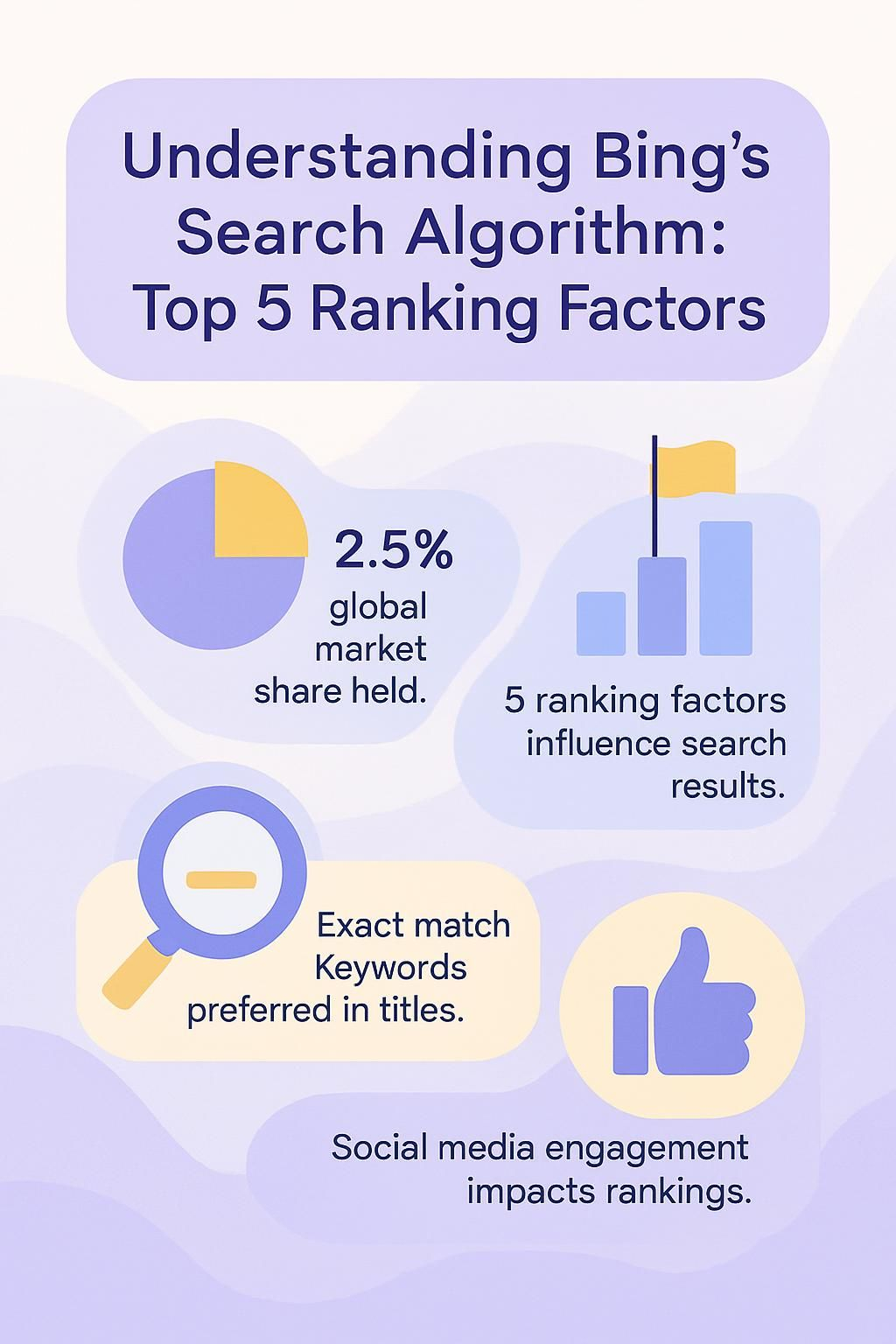
- Bing holds 2.5% global market share and values five main ranking factors: content quality, keyword placement, backlinks, user engagement, and social signals, making it different from Google’s approach to search rankings.
- The search engine gives more weight to exact-match keywords in titles, meta descriptions, and headers, while favouring backlinks from .edu, .gov, and .org domains over link quantity.
- Social media engagement directly impacts Bing rankings, with likes, shares, and comments on platforms like LinkedIn playing a key role in search result positions.
- Bing Webmaster Tools offers essential features for tracking rankings, monitoring backlinks, and submitting sitemaps, while Bing Places helps local businesses improve their visibility in search results.
- Unlike Google’s mobile-first approach, Bing maintains a single index for both mobile and desktop searches, and still supports Flash content while emphasising traditional SEO elements.
What is Bing’s search algorithm and how does it work?
Bing’s search algorithm works like a smart digital assistant. It sorts through billions of web pages to find the best results for each search. The system uses machine learning to understand what people want when they type in their queries.
Bingbot is the crawler that explores the internet for Bing. Think of it as a robot that visits websites and reads their content. This crawler helps Bing create a massive index, which is like a giant library catalogue of web pages.
The algorithm checks many different signals to rank pages. These signals include the quality of your content, how many other sites link to yours, and how visitors behave on your pages. Microsoft’s search engine values fresh, original content from trusted websites the most.
The system also tracks user behaviour patterns. It watches things like click-through rates and how long people stay on pages. This helps Bing improve its results over time. When people click on a result and stay on that page, it tells Bing the content is useful.
Bing uses artificial intelligence features to make searches more helpful. The search engine follows Microsoft’s strict rules for responsible technology use. This means it tries to give fair and accurate results to all users.
Top 5 ranking factors in Bing’s algorithm
Bing uses five main factors to decide where websites appear in search results. Understanding these factors helps you improve your website’s visibility. Each factor carries different weight in the ranking process.
How important is content relevance and quality for Bing?
Content relevance and quality form the foundation of Bing’s ranking system. Your content must match what users are searching for. It needs to provide complete, useful answers to their questions. Bing rewards pages that solve specific problems for readers.
The search engine checks if your content is original and fresh. Duplicate content or text generated by machines can hurt your rankings. Pages with copied content often drop in search results. Bing wants to show users unique information they cannot find elsewhere.
Following Bing’s Webmaster Guidelines helps your content score well. The algorithm examines several quality signals. These include how long people stay on your page and whether they need to search again after visiting. If users spend time reading your content, Bing sees this as a good sign.
Bing breaks down rankings into six key areas. These are relevance, quality, user engagement, freshness, location, and page speed. Your content should cover topics thoroughly and offer unique insights. Regular updates keep your content fresh and relevant.
Pages with exact-match keywords often rank better in Bing. But stuffing too many keywords will damage your rankings. The best approach is to write naturally while including your target keywords where they make sense.
Where should keywords be used and placed on a page?

Strategic keyword placement makes a big difference in Bing rankings. Your main keywords should appear in specific places on each page. The most important spots are page titles, meta descriptions, header tags, and the first 100 words of text.
Bing’s algorithm gives extra weight to exact keyword matches. This is especially true in titles and headers. These locations help Bing understand what your page is about. The search engine uses this information to match your content with relevant searches.
Focus on one primary keyword per page for best results. This approach helps Bing understand your page’s main topic clearly. Place keywords naturally throughout your content. Pay special attention to title tags and headers, as these carry the most weight.
The Bing Keyword Research Tool can help you choose the right terms. Use it to find keywords that people actually search for. Avoid keyword stuffing at all costs. Too many keywords make your content hard to read and can hurt your rankings. For more insight on this topic, read our article debunking common Bing SEO myths.
Spread keywords evenly across your content. Keep the text natural and easy to read. Good keyword placement feels invisible to readers but helps search engines understand your content.
Why do backlinks and domain authority affect Bing rankings?
Backlinks act as votes of confidence for your website. When other sites link to yours, they tell Bing your content is valuable. The more quality links you have, the more Bing trusts your site.
Bing values links from educational and government websites highly. Links from .edu and .gov domains carry extra weight. The search engine also favours links from .org websites. These types of sites are seen as more trustworthy sources.
The total number of backlinks matters more to Bing than to Google. While quality is still important, quantity plays a bigger role. This means building more links can help your Bing rankings, even if some links are not perfect.
Domain age affects your rankings too. Older domains tend to rank better in Bing search results. The search engine sees established domains as more reliable. New websites may need to work harder to build trust.
Clear anchor text in backlinks helps Bing understand your content. The words used in links tell Bing what your page discusses. Unlike Google, Bing focuses more on overall domain authority than individual page authority. Building links to your homepage can boost all your pages in search results.
How does user engagement influence Bing search results?

User engagement signals tell Bing how well your content satisfies searchers. The search engine tracks several key metrics. These include click-through rates, dwell time, and bounce rates. Each metric helps Bing understand if users find your content helpful.
Dwell time measures how long visitors stay on your page. Longer visits suggest your content is valuable and engaging. Bounce rate shows how often people leave immediately. High bounce rates can signal that your content does not match user expectations.
Bing adjusts rankings based on real-time user behaviour. Your site’s position can change quickly based on how people interact with it. If many users click your result and stay on your page, your ranking may improve. The opposite happens when users quickly return to search results.
The algorithm measures user satisfaction through post-click actions. It watches whether visitors explore more pages on your site. It also checks if they need to modify their search after visiting. Pages that fully answer user questions tend to rank higher.
Creating engaging content keeps visitors on your site longer. Use clear headings, images, and easy-to-read formatting. Break up long text with lists and subheadings. Make sure your content delivers what your title promises.
What role do social signals and shares play in Bing’s algorithm?
Social signals carry real weight in Bing’s search algorithm. Unlike Google, Bing openly uses social media activity as a ranking factor. The search engine looks at likes, shares, and comments across social networks. More social engagement often leads to better rankings.
LinkedIn activity seems especially important for Bing rankings. Content that gets shared and discussed on professional networks may rank higher. The search engine views social engagement as a sign of content quality and relevance.
Bing’s knowledge graphs pull data from social media platforms. This helps the search engine understand trending topics and current events. Real-time social signals help Bing deliver fresh, relevant content to users. The algorithm spots what people find interesting right now.
Building a strong social media presence can boost your Bing visibility. Share your content across different platforms regularly. Encourage readers to share and comment on your posts. Create content that naturally encourages social sharing.
High social engagement often correlates with better search positions. Content that goes viral on social media may see ranking improvements. This connection between social signals and rankings makes Bing unique among major search engines.
How Bing differentiates itself from Google?
Bing takes a different approach to search rankings than Google. Microsoft’s search engine values social signals as a key ranking factor. Google does not count social media activity in its algorithm at all. This fundamental difference affects how you should optimise for each search engine.
Exact-match keywords matter more to Bing than to Google. Bing gives higher rankings to pages with exact keyword matches in titles and content. Domain authority also carries more weight in Bing’s algorithm. These differences mean traditional SEO tactics often work better on Bing.
Bing excels at finding multimedia content. The search engine makes it easier to discover images, audio files, and videos. Its partnership with OpenAI’s ChatGPT brings AI-powered features to search. Users can get more detailed answers to complex questions through this integration.
Several technical differences set Bing apart from its main competitor. Bing maintains one index for both mobile and desktop searches. Google uses a mobile-first indexing system instead. This means Bing treats desktop and mobile content equally.
Flash content still works on Bing, though Google stopped supporting it. Local businesses often get better visibility on Bing too. The search engine shows local results for unclear searches, while Google tends to show popular websites first.
Bing relies more on traditional SEO elements. Meta keywords and exact-match anchor text still influence rankings. These old-school tactics make it easier for website owners to optimise their pages. Basic SEO practices often produce better results on Bing than on Google.
How to optimise your website for Bing?
Optimising your website for Bing requires specific strategies. These proven tactics will help boost your site’s visibility in Bing search results. Each step addresses a key aspect of Bing’s ranking algorithm.
- Place exact-match keywords in your page titles, headings, and domain names to help Bing understand your content better.
- Get quality backlinks from .edu, .org, and .gov websites instead of lots of low-quality links from random sites.
- Add schema markup to your web pages so Bing can show rich snippets in search results.
- Share your content on social media platforms because Bing values social signals more than other search engines.
- Create local business listings on Bing Places and keep your contact details, hours, and photos up to date.
- Use Bing Webmaster Tools to track your rankings, check backlinks, and spot any site problems.
- Make your content clear and useful, with plenty of images and videos to keep readers interested.
- Write detailed meta descriptions with keywords to improve your click-through rates.
- Speed up your website loading time to keep visitors happy and improve your rankings.
- Submit your sitemap through Bing Webmaster Tools so all your pages get crawled properly.
- Add alt text to all images to help Bing understand your visual content.
- Create content that answers common user questions in your industry.
- Make your website mobile-friendly since many Bing searches happen on phones.
- Include multimedia elements like images, videos, and infographics in your content.
- Check your website’s technical SEO basics like proper URL structure and working links.
These optimisation steps work together to improve your Bing rankings. Start with the basics like keyword placement and quality content. Then move on to more advanced tactics like schema markup and social media engagement. Regular monitoring through Bing Webmaster Tools helps you track your progress and spot new opportunities. Get our step-by-step Bing Webmaster Tools guide for detailed setup instructions.
Conclusion
Bing’s search algorithm rewards websites that focus on five key areas. Quality content, smart keyword placement, strong backlinks, user engagement, and social signals all matter. Success on Bing comes from understanding how these factors work together.
Your website can reach more users across Microsoft’s search network. Smart SEO practices designed for Bing will improve your rankings over time. The search engine values traditional SEO tactics that Google may ignore.
Bing Webmaster Tools gives you the data you need to succeed. Track your progress, monitor your backlinks, and fix problems quickly. Use these insights to refine your strategy and stay ahead of competitors who ignore Bing’s potential. Need professional help? Our content and on-page SEO services are designed specifically for Bing optimization.
FAQs
1. What makes Bing’s search algorithm different from Google’s?
Bing’s algorithm focuses heavily on social signals, user experience, and local search factors. Unlike Google SEO, Microsoft’s Bing puts extra weight on social media signals and multimedia content for search engine rankings.
2. How important is technical SEO for Bing rankings?
Technical SEO plays a vital role in Bing rankings. Key factors include proper schema markup, structured data, meta descriptions, and title tags. Website speed and mobile optimisation also greatly affect your rankings.
3. What role do social signals play in Bing’s algorithm?
Social sharing and user engagement metrics are crucial ranking factors for Bing. The search engine values content that gets shared on social platforms and considers author reputation when determining search results.
4. How can I improve my local search rankings on Bing?
Use Bing Places and include location-specific keywords. Focus on high-quality content with local relevance. Make sure your site has proper meta tags and schema markup for local searches.
5. What tools does Bing offer for SEO optimisation?
Bing Webmaster Tools and the Bing keyword research tool help digital marketers track performance. These tools show click-through rates, crawl data, and help with sitemap submission.